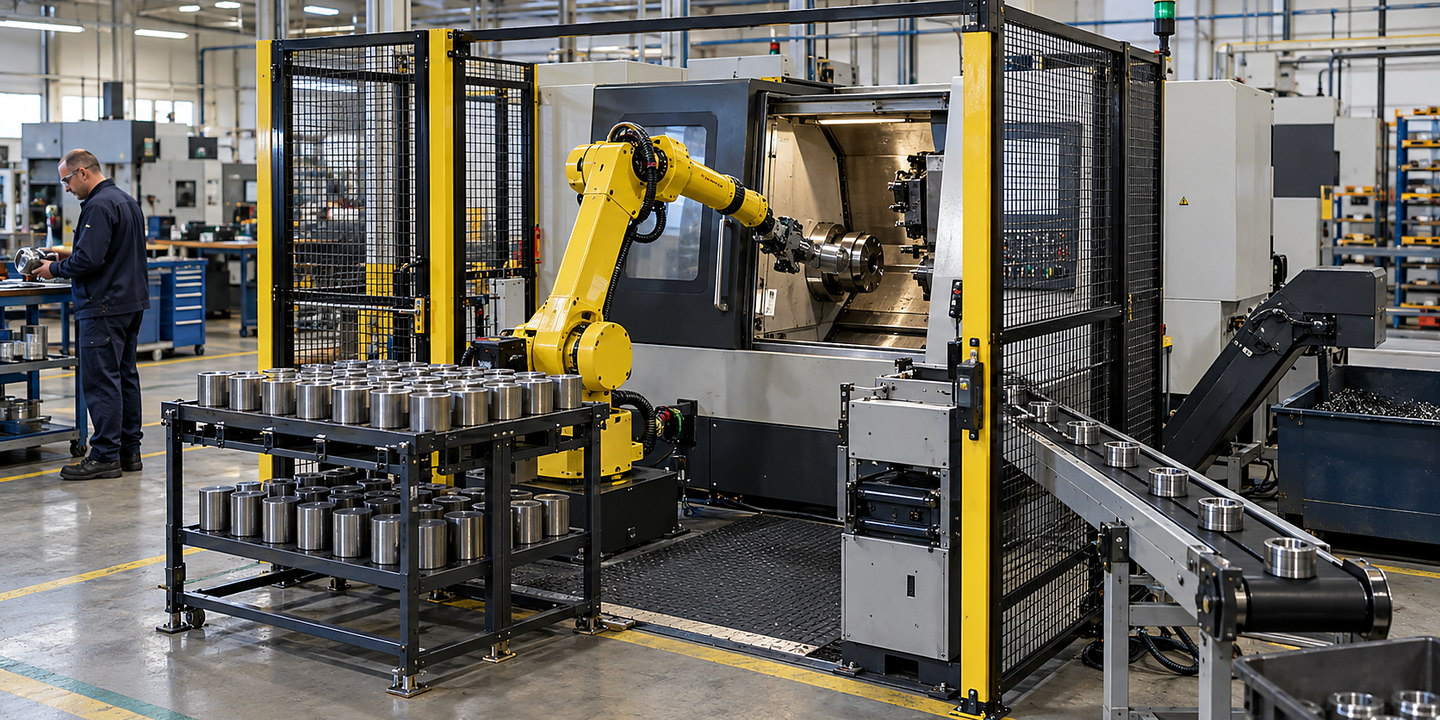
Plan mechanical, electrical, control, data, safety and operator interfaces for robot offline programming.
In brief
Robot offline programming integration connects the model assumptions to the physical cell. Confirm the layout and reference positions, tooling and fixtures, machine or line signals, operating modes and the people responsible for checking each interface.
Record differences between supplied information and the installation, the effect on the planned sequence, and the evidence needed to resolve them. The specification checklist helps distinguish included work from dependencies on other equipment or teams.
On the production floor
Connect equipment, controls and people into one reliable process — Robot Offline Programming
Plan robot offline programming around your parts, process, cycle time, tooling, recovery and acceptance criteria. Discuss the highest-risk feasibility questions with Oxford Industrial Automation. Your integration review should connect required cycle and production pattern, tooling, sensing and process interfaces and the people who run the process.
Six areas to coordinate for robot offline programming
Mechanical
Identify the layout, fixture and tooling reference positions used by the model. Record how they will be checked against the installation, including relevant access and transfer arrangements; note any unconfirmed dimension that affects the proposed sequence.
Electrical
For Robot Offline Programming, list the supplies, isolation, protective devices, panels and cable routes required by the proposed installation.
Controls
List the machine or line signals, operating modes, permissions and responses assumed in the model. Assign responsibility for confirming their meaning and behaviour on the cell, including the agreed handling of a missing or unexpected response.
Safety
Review risk controls, stop behaviour, access, reset and the checks needed around tooling, sensing and process interfaces.
Data
Keep the model, programme information, layouts and test records associated with their revisions and the physical cell state they describe. Record adjustments made during commissioning and which related assumptions or checks need review afterwards.
Your team
Plan normal operation, replenishment, clearance, cleaning, maintenance and training for retrofit or flexible cells involving robot simulation and offline programming.
How the work comes together
Plan fault recovery for repeatable production using robot simulation and offline programming as carefully as normal running
For Robot Offline Programming, your team can review each stage before the complete installation is put into routine use.
01
Observe the Current Process and Collect Representative Samples
Share representative parts, process observations and cycle data, including the normal range for part, product and process variation for robot simulation & offline programming and the difficult arrival pattern and presentation cases.
02
Prove Handling and Process Risks in a Focused Feasibility Trial
Compare suitable methods and use focused trials to show how each option performs against required cycle and production pattern.
03
Design and Build the Complete Guarded Cell
Connect the equipment to your line, services and controls while resolving tooling, sensing and process interfaces for day-to-day operation.
04
Run Agreed Scenarios and Support Production Ramp-Up
Confirm operator access, recovery and changeover, then complete and record run-off criteria and production evidence before your operating team takes over.
For your application: check required cycle and production pattern, tooling, sensing and process interfaces, operator access, recovery and changeover, and run-off criteria and production evidence as part of the complete line trial.
Important limits
Line connections can change the approach for Robot Offline Programming
Cycle time depends on the complete process rather than robot speed alone.
Part presentation, tolerances and recovery cases must be included in feasibility work.
Collaborative operation or automatic handling cannot be assumed safe without an application assessment.